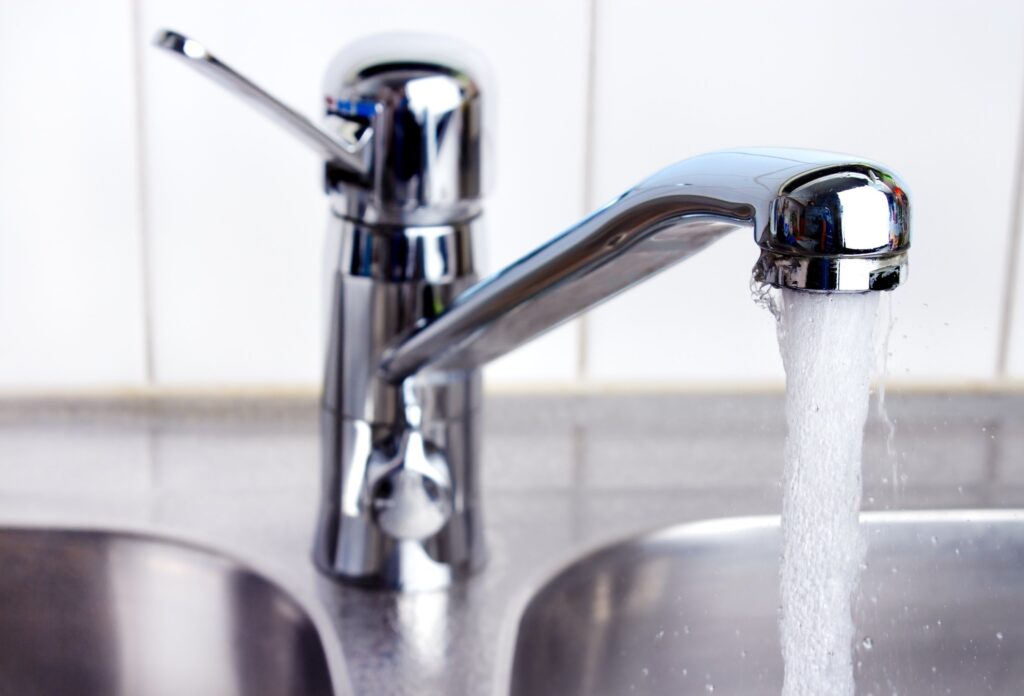
How to clean a kitchen faucet
The kitchen faucet is one of the most used pieces in the whole house. It is exposed to all kinds of residues, such as food debris, grease and limescale, which affects its appearance and functioning over time. Cleaning a kitchen faucet on a regular basis helps keep it in good shape and contributes to the overall hygiene of the kitchen. Here, we explain how to clean a kitchen faucet effectively and with accessible products.
Step 1: Gather the necessary materials
Before you start cleaning the faucet, make sure you have the right materials. For efficient cleaning, you’ll need:
- A soft cloth or non-abrasive sponge
- White vinegar
- Baking soda
- A screwdriver (if needed to disassemble the faucet)
- Cleaning gloves (optional)
- A clean, dry rag to dry
These products are easy to find at home and are effective at removing dirt, limescale and residue without damaging the faucet.
H2: Step 2: Turn off the water supply
Before you start cleaning the faucet, make sure that the water supply is turned off to avoid any accidents. Locate the water shut-off valve and turn it off. Then, turn on the faucet to release the remaining water into the pipes. This will prevent you from spilling while cleaning.
Step 3: Remove limescale deposits
One of the main problems that affect kitchen faucets is limescale buildup, especially if you live in an area with hard water. Limescale builds up around the spout, connections, and faucet base, affecting aesthetics and obstructing the flow of water.
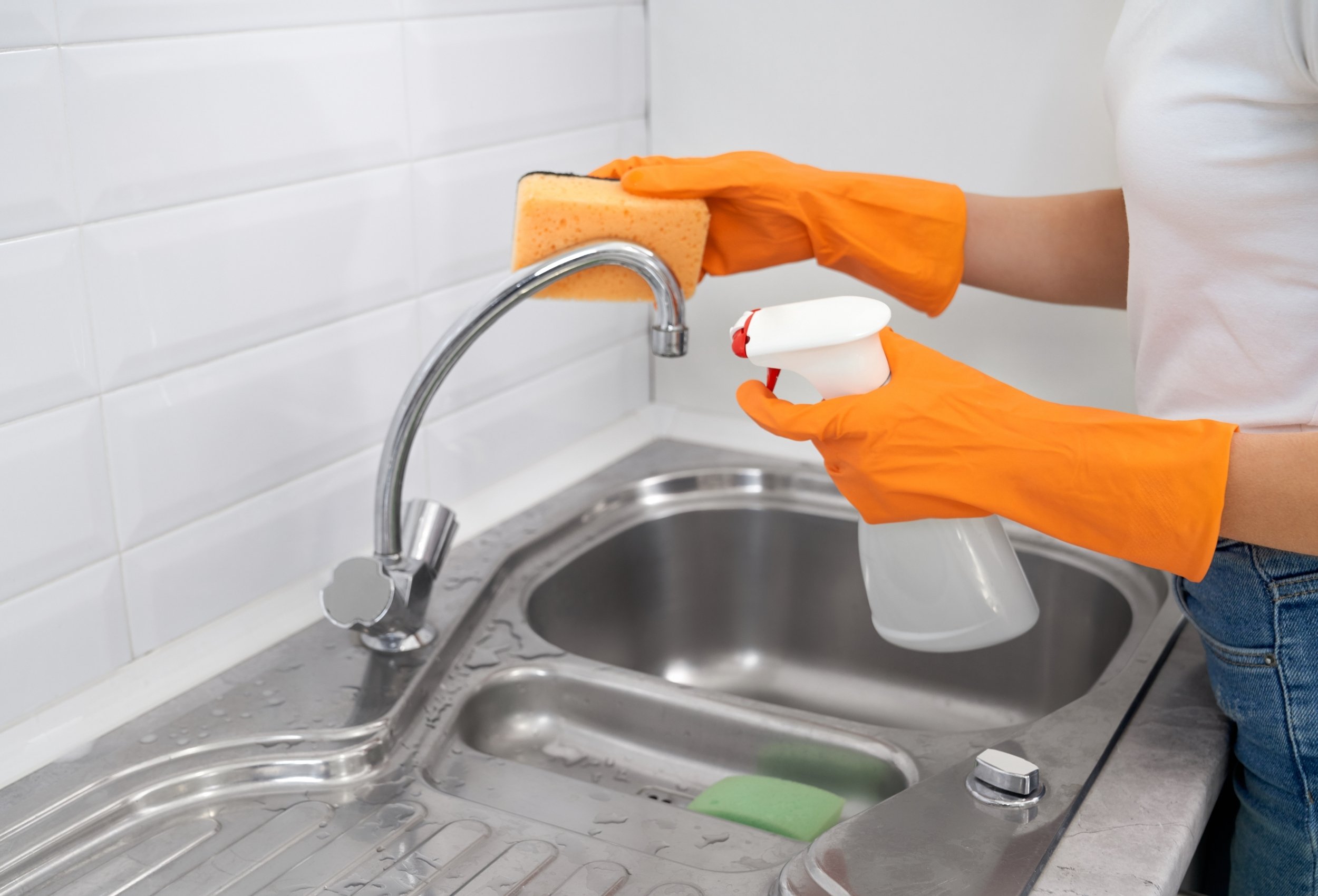
To remove limescale deposits, use white vinegar. Dip a rag or sponge in white vinegar and wrap it around the affected parts of the faucet. Leave it on for about 10-15 minutes so that the vinegar softens the limescale. If the limescale is more stubborn, use a little baking soda on the rag along with the vinegar for best results.
Step 4: Cleaning the Faucet Surface
Once you’ve treated the limescale, it’s time to clean the faucet surface. Use a soft cloth and a little white vinegar to remove grease, water, and dirt stains that build up on the faucet. Wipe the entire surface of the faucet, making sure to thoroughly clean all visible parts, such as the spout, base, and knobs.
Avoid using abrasive scouring pads, as they can scratch the finish of the faucet. If the faucet has water or grease stains, vinegar is an excellent natural degreaser that won’t damage the surface.
Step 5: Cleaning the Aerator
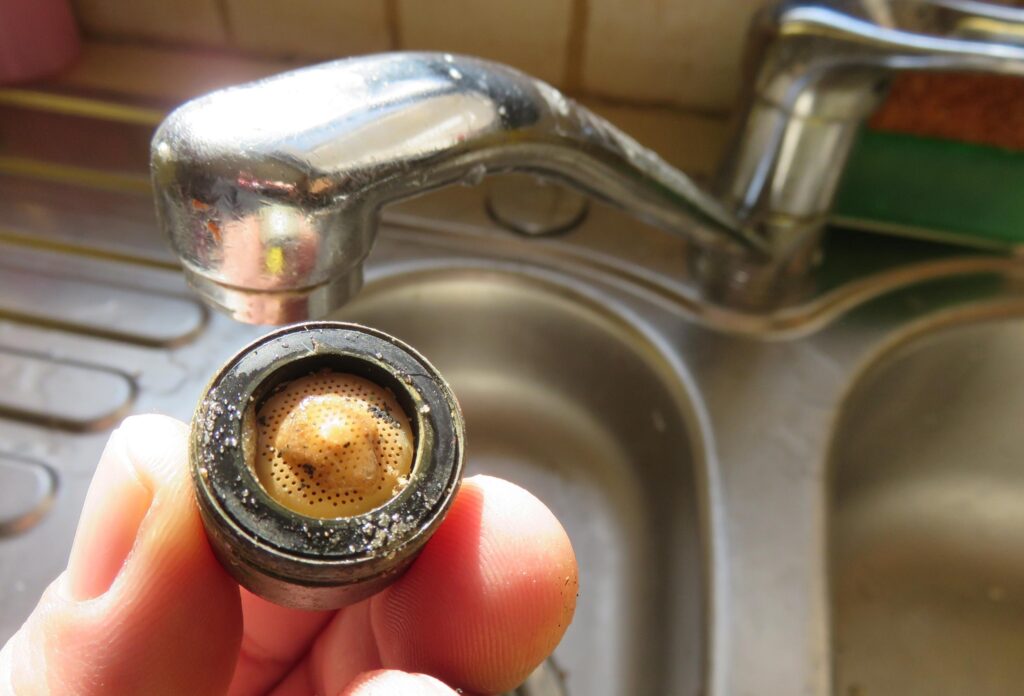
The aerator is the small mesh located at the bottom of the faucet that helps regulate the flow of water. Over time, the aerator accumulates dirt and debris, which affects the performance of the faucet. To clean it, use a screwdriver to carefully remove it . Place it in a bowl of white vinegar and let it sit for about 30 minutes. Then, use a soft-bristled brush to remove any remaining dirt. Rinse it thoroughly before putting it back on the tap.
Step 6: Disinfect the Controllers and Handles
Faucet knobs accumulate bacteria and dirt, especially if they are touched with dirty hands while cooking. To disinfect the controllers, use a mixture of warm water and neutral soap. Use a soft cloth to clean the controllers thoroughly, making sure that no soap residue remains. If you prefer to disinfect with vinegar, you can dilute it with water in a 1:1 ratio to prevent the vinegar from leaving a strong smell.
Step 7: Rinse and dry the faucet
Once you’ve finished cleaning and disinfecting all parts of the faucet, it’s important to rinse everything thoroughly with clean water to remove any residue of cleaning products. Then, use a clean, dry cloth to dry the faucet. This will prevent water stains or debris from accumulating that can damage it over time.
Step 8: Perform regular maintenance
To keep your kitchen faucet in perfect condition, it is important to perform regular cleaning. Depending on the hardness of the water in your area, you may need to clean your faucet more frequently to prevent limescale buildup. As a recommendation, do a deep cleaning of the faucet at least once a month to ensure that no residue accumulates and that the faucet continues to work properly.
Ready to have a bright and functional faucet?
Cleaning a kitchen faucet doesn’t have to be a difficult task or time-consuming. With the right materials and a few simple steps, you can keep your faucet free of limescale, grease and dirt, ensuring its proper functioning and a clean and shiny appearance in your kitchen.
If you need more tips on how to take care of your kitchen accessories, or if you are looking to replace your faucet with a new one, do not hesitate to visit our Online taps. There you will find kitchen faucets and wall-mounted kitchen faucets that will fit your needs and style.