


Difference between thermostatic faucet and single-lever mixer: which one to choose for your home?
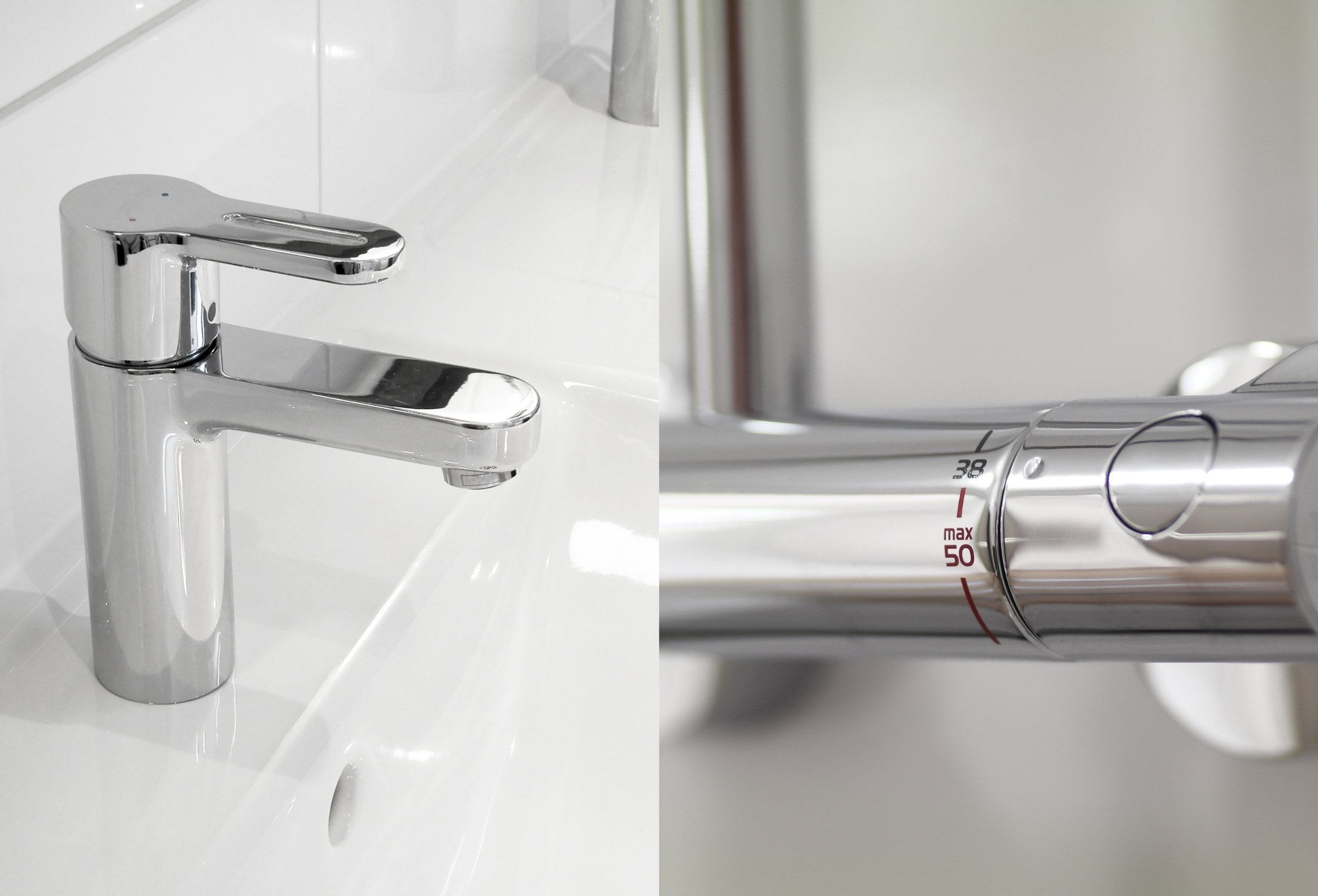
When choosing the right faucet for your home, it is important to understand the difference between single-lever and thermostatic taps. While both are popular in bathrooms and kitchens, they offer distinct usage experiences due to their temperature and water flow control mechanisms.
If you are wondering which type of faucet is best for your home, from our online faucet we explain the main differences between single-lever and thermostatic taps, their advantages and what solutions they provide in terms of comfort, energy efficiency and safety.
Differences in temperature and water flow control
The main difference between single-lever and thermostatic faucet lies in the way they control the water.
The single-lever tap allows the user to regulate both the water flow and the temperature with a single lever. It’s quick and easy to use, making it a great choice for kitchen and bathroom sinks where simple and quick adjustments need to be made. The mechanism is simple, but requires the user to manually adjust both the temperature and flow rate, which can take time and waste water while the exact point is found.
In contrast, the thermostatic faucet uses an advanced automatic temperature regulation system, ensuring that the water is always kept at a constant temperature. Regardless of variations in hot or cold water pressure, the thermostatic faucet automatically adjusts to keep the water at the set temperature. This eliminates the need for constant adjustments, offering a much more comfortable and precise experience, especially useful in showers or bathtubs where temperature is an important factor.
Water efficiency and saving: which is the most sustainable?
One of the most relevant aspects of the difference between a single-lever and thermostatic tap is the efficiency in the use of water. Single-lever faucets, while fast and convenient, have a greater waste of water, especially when it takes the user time to find the right temperature. This waste of water is a problem if care is not taken when adjusting the tap, which affects both water consumption and bills.
Thermostatic faucets, on the other hand, are more energy-efficient and water-saving. As they keep the temperature constant, there is no need to let the water run while adjusting the hot and cold water mixture, reducing unnecessary hot water consumption. Some models also include temperature limiters, allowing water to be kept in a specific range without wasting additional water.
Safety: Which is safer for your family?
Safety is another point in favor of thermostatic faucets. Many of these models include burn protection systems, which means that the water will not exceed a pre-set temperature, preventing accidents in homes with children or elderly people. This feature makes the thermostatic faucet ideal in environments where safety is a priority.
On the other hand, single-lever taps do not always have this type of automatic protection. Although some models include a temperature limiter, the adjustments are manual, which can make it easier to make mistakes when adjusting the temperature, especially if you are not paying enough attention.
Convenience and ease of use: choose the one that best suits your routine
In terms of comfort and ease of use, single-lever taps are one of the most practical and fastest options. The simplicity of its design allows for quick and hassle-free adjustment of water temperature and flow. This makes them the preferred option in spaces with high user turnover, such as kitchens or bathrooms where quick access to water is needed.
On the other hand, thermostatic faucets offer a more comfortable experience in the long run. Once the faucet is set up, no adjustments are required during use. While the initial installation is a bit more complex than on a single-lever faucet, the convenience of not having to constantly adjust the water makes this type of faucet ideal for those who spend time in the shower or bathtub.
Durability and maintenance: which type of faucet has the longest service life?
In terms of durability and maintenance, single-lever faucets are usually simpler to maintain and repair due to their basic design. They don’t have complex systems like thermostatic taps, which means they have fewer parts susceptible to wear. This can make them easier to repair in case something goes wrong, and they often have a longer lifespan due to their simple construction.
Thermostatic faucets, on the other hand, while very durable, require a bit more specialized maintenance due to their advanced technology. It’s important to make sure that your thermostats and faucet components are kept in good shape to still offer precise temperature control. Despite this, the durability of these faucets is also quite high, especially if quality materials are used in their manufacture.
Which faucet is best for your home?
The choice between a single-lever faucet and a thermostatic faucet depends largely on the specific needs of your home. If you are looking for a quick and practical solution for adjusting the temperature and flow of water, single-lever taps are the best option. They are ideal for people who need comfort and ease in everyday tasks such as washing hands or washing dishes, where the settings do not have to be perfect.
However, if you prefer long-term comfort, safety and energy efficiency, a thermostatic faucet will be the most suitable option. The ability to maintain a consistent temperature efficiently and safely is a significant advantage, especially if you spend a lot of time in the shower or bathtub. In addition, its ability to save water and energy makes this option more sustainable and economical in the long term.
Get to know the Universal Faucet options
If you are interested in exploring options between one model and another, visit our store and discover our variety of single-lever and thermostatic faucets that adapt to any style and need. For those who prefer precise temperature control technology, don’t hesitate to take a look at our thermostatic faucets.